White-Label Web Development for UK Agencies
Blunt Notion provides white-label web development for design, marketing and digital agencies across the UK. Bring us an approved design, a difficult technical brief or a website that needs a capable pair of hands. We can take responsibility for the agreed development work while you keep the client relationship and commercial control.
WordPress is our deepest specialism. Shopify, suitable PHP-based systems, integrations and existing codebases are also part of the conversation when they fit the job.

The work is sold. The build is the hard bit.
The design is ready, development capacity isn’t.
Your team has produced the visual direction, but the project now needs somebody who can turn it into a responsive, editable, tested website. We can take supplied Sketch, Figma, Photoshop or other usable design files, clarify missing behaviours and build the agreed templates and functionality. If the mobile designs do not exist, we can work out the responsive rules with your designers rather than guessing in silence.
The brief has technical weight.
Search, filtering, complex forms, accounts, structured content, third-party APIs and awkward data flows need more than a polished homepage. We can help assess what should be custom, what can sensibly use established software and what needs discovery before your agency promises a fixed price.
The existing site has to be inherited.
A client’s current website may need extending, migrating or rescuing rather than replacing. We can inspect the theme, CMS, dependencies, hosting and content before proposing the work. That inspection may reveal that the sensible route is a targeted fix, a phased rebuild or a different platform altogether.
Your team needs capacity without a permanent hire.
Sometimes you need one specialist for one build. Sometimes you need reliable development support through a run of client projects. We can agree a project, a defined period of capacity or ongoing work with clear priorities. We will say when availability or scope makes a deadline unrealistic.

A build goes wrong long before the first bug report.
Good development starts with an honest reading of the brief. A design can look complete while leaving unanswered questions about content length, empty states, tablet behaviour, editing rules, search results, forms or third-party data. Those questions turn into rework if nobody asks them before the build.
We review the actual materials: designs, page types, content model, existing code, integrations, hosting, accessibility needs and launch constraints. We separate known requirements from assumptions and give your agency useful questions to take back to the client. If discovery is substantial, it can be scoped as its own piece of work rather than smuggled into a “quick quote”.
This is where working directly with an experienced developer matters. You can discuss feasibility, trade-offs and cost without a chain of account managers translating every technical point. Kieron leads the development conversation and is accountable for the work Blunt Notion agrees to deliver. Where a specialist collaborator is needed, that is agreed rather than hidden.
You can keep us entirely behind the scenes or involve us in selected technical conversations under your agency’s name. Either way, the client relationship remains yours. For the wider partnership, see our white-label agency services.
Development that fits the brief, not a platform sales target.
We do not start every conversation by forcing the same CMS onto the job. These are the routes we can discuss. The technical choice should follow the client’s content, commerce, integration, budget and support requirements.
-

Websites from supplied designs
Responsive front-end development, reusable components, structured templates, editing workflows and the practical states that make an approved design work outside a presentation. We can also contribute design and structure when a project needs more than implementation alone.
-
WordPress and WooCommerce development
Bespoke themes, tailored blocks, structured content, WooCommerce, migrations, integrations and inherited-site work. We can retain an existing builder or theme where that is genuinely the better commercial answer.
-
Shopify and ecommerce builds
Storefront development, theme work, content and product structure, integrations and careful changes to existing stores. Shopify may be a better fit than WordPress for a particular retail operation; that is a recommendation to make openly, not a threat to our preferred stack.
-
PHP, CMS and integration work
Suitable PHP-based applications and CMSs, custom features, API connections and extensions to established codebases can be assessed on their merits. We do not claim every language or framework. If the best answer is outside our working stack, we will say so early.


Clear enough for your project manager to run with.
The process is agreed to suit the job, but there should be no mystery about who decides what or what happens next. We keep your agency informed so you can manage the client with confidence.
Scope the real requirement.
Send the brief, designs, current website, page and template list, required functions, integration details and intended date. We identify gaps, risks and dependencies before estimating. A technically uncertain feature may need paid investigation before either side can give a responsible fixed quote.
Agree the working boundaries.
We settle deliverables, milestones, access, feedback route, client visibility, confidentiality, ownership and how changes will be approved. Your agency controls its client-facing quote and margin. We price the work we are responsible for.
Build and review in stages.
Development is visible on an agreed staging environment. Your team can review representative templates and functionality before everything is populated. We raise issues while there is time to resolve them and distinguish defects from changes to the agreed scope.
Test, launch and hand over.
We test the agreed browsers, screen sizes, key journeys, forms and integrations, with accessibility, performance and technical SEO considered as part of the build. Launch responsibilities are decided beforehand. Code, credentials, relevant notes and any support arrangement are handed over in the way your agency needs.

The design is the starting point. The working website is the deliverable.
A supplied design should not become an excuse for a developer to ignore the details the client will actually use. We look at the content model, editing experience, responsive rules, accessibility, loading behaviour and technical SEO before deciding how the pages should be built.
Sometimes a precise design needs to be followed closely. Sometimes a component needs a conversation because it does not work with live content or a smaller screen. We make that call with your agency, not behind it. If there is no separate mobile design, we can work from a sound desktop design and agree how it adapts. If a wireframe or extra design pass would save development time, we can provide one.
The CMS should make the finished site useful to the people who will maintain it. That might mean tailored WordPress fields and blocks, Shopify content structures or a suitable PHP-based CMS. It does not mean exposing every design decision as an ungoverned control panel.
What you receive is the agreed working build, staging access, a clear review path and a proper handover. Hosting and ongoing support are available where useful, not a condition of owning the website.

-
A defined project.
Bring us a new website, ecommerce build, migration or substantial feature. We scope and price the agreed delivery, with review and change points clear from the start.
-
A specialist part of a larger build.
Keep your own team on design, account management or the wider platform. We take an agreed technical slice, front-end implementation, CMS development, integrations or a difficult inherited component and coordinate with your people
-
Ongoing agency capacity.
Where repeat work makes sense, we can plan capacity for development, improvements and support across your client sites. Priorities, availability and response expectations need to be explicit; “unlimited” work is not a serious promise.
You can inspect the public work. Private agency work stays private.
Our public projects show the quality and breadth of work Blunt Notion can deliver. They are not being passed off as confidential white-label commissions. Some agency projects cannot be named or shown; where permission allows, we can talk through relevant experience privately.
-

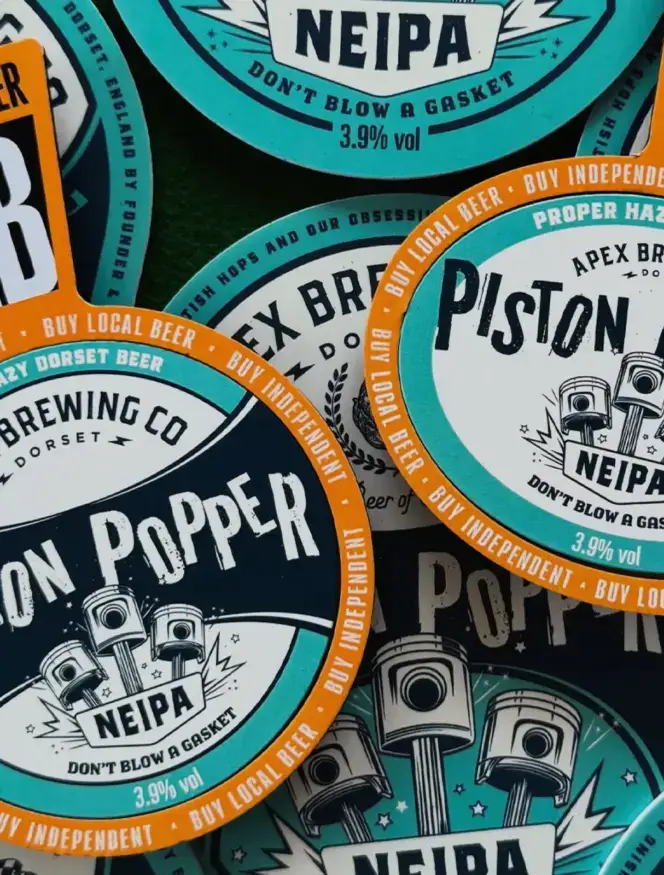
Apex Brewing Co
Content implementation, Ecommerce structure, Responsive front-end development, Shopify theme development, Technical planning
Independent brewery and ecommerce
-
Geo-Design
Branding, CMS, Hosting & Maintenance, SEO, Web Design, Web Development, WordPress
Geotechnical Consultancy, Rock Engineering
-
Highground
Branding, CMS, Hosting & Maintenance, Web Design, Web Development, WordPress
Consulting



Straight answers before you put our name on your supplier list.
These are the questions worth settling before an agency stakes a client relationship on an outside development partner.
Yes. Send the design files, a page/template list and notes on interactions and content. We review responsive behaviour, missing states and functionality before quoting the build. We can work from Sketch, Figma, Photoshop and other usable files.
No. WordPress is our main technical specialism, including WooCommerce, but we also work with Shopify and assess suitable PHP-based CMSs, integrations and existing codebases. The decision should be based on the client’s requirements. We do not present ourselves as specialists in every language, web builder or enterprise platform.
Yes. We can review the brief, identify technical unknowns and help you define the development scope. A straightforward assessment can sit within an early conversation; complex discovery, architecture or investigation may need to be quoted as a separate task. Either way, the point is to avoid promising a price built on guesses.
Often, yes. We need appropriate access to inspect the code, CMS, hosting and dependencies first. We can agree boundaries with your existing developer and take a defined part of the work. We will not promise to rescue an unknown codebase before seeing it.
That depends on the arrangement you want. We can remain behind the scenes, be introduced as part of your delivery team or join selected technical discussions under agreed terms. We will not approach your client independently. Confidentiality, non-solicitation, attribution and communication should be written into the working agreement.
Ownership of the commissioned work, third-party licences, hosting, access and handover should be set out before development starts. We do not build artificial dependence into a site to keep an agency tied to us. Some commercial tools and services have their own licences, which need to be assigned or maintained correctly.
It depends on the designs, templates, functionality, integrations, existing code, timescale and level of uncertainty. Defined projects can be quoted against an agreed scope; open-ended work may be better handled by a time-based arrangement. We are not a few-hundred-pound website factory. Share the brief, budget range and deadline and we can discuss a sensible route.
Your agency can manage hosting and support, or we can agree ongoing technical help. Launch tasks, warranty fixes, later changes, licence renewals and support response expectations should be distinguished clearly at handover. A project does not need to become a compulsory monthly retainer.
Got a development brief that needs a proper answer?
Send the design or existing site, the intended functionality, platform constraints, deadline and any budget range you can share. Tell us which parts your agency wants to keep and where you need us involved. Kieron will look at the actual brief and tell you what needs clarifying, what looks viable and whether Blunt Notion is the right fit.