Website Development Agency in Somerset
Blunt Notion develops bespoke websites from Yeovil for businesses across Somerset, the UK and overseas. WordPress is often our preferred foundation. Shopify is frequently the better answer for ecommerce. We can also inherit, extend or rebuild websites running on other established content-management systems.
The technology follows the requirement. It doesn’t get to dictate it.
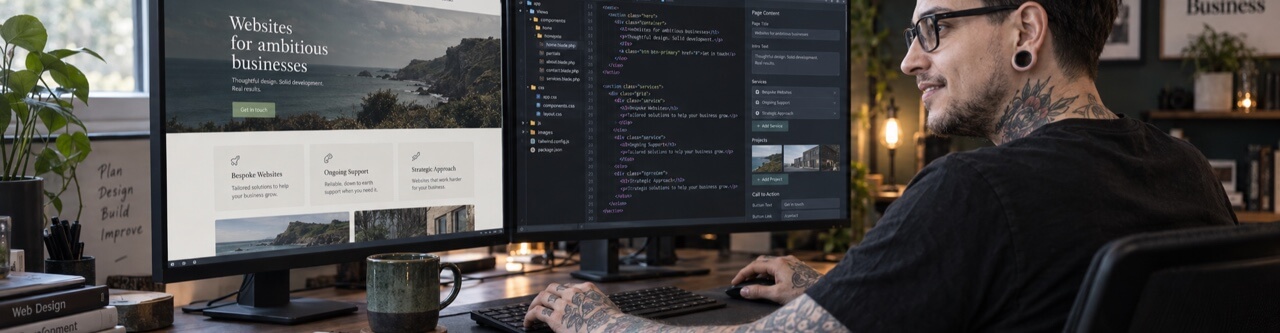

A website should fit the business. The business should not have to work around the website.
Development is where the decisions made during discovery and design become a working product. It covers what appears in the browser, what happens behind it, how content is managed, which systems exchange information and whether the whole thing remains usable after launch.
A weak build creates friction everywhere. Pages become difficult to update. A simple design adjustment breaks three templates. Plugins overlap. Product data has to be entered twice. Important content has no proper place to live. Performance declines and nobody is quite sure what can be changed safely.
We begin with the content, functionality, users and operational requirements. Then we decide how the website should be structured and which platform provides the right balance of control, reliability, cost and future flexibility.
For many content-led websites, that means a bespoke WordPress development project. For the right retailer, Shopify can remove unnecessary operational and technical overhead. Existing websites may need improvement rather than replacement. More specialised requirements may justify another CMS, a Laravel-based system or properly scoped custom development.
There is no commission for recommending the most complicated answer. If a maintained extension solves the problem properly, we will use it. If custom code is justified, we can build it. If the requirement is a bad use of the available budget, we will say so before it becomes an expensive lesson.

Requirements and technical scope.
We establish what the website needs to publish, what visitors need to do and what the business needs to manage. That includes content types, user journeys, forms, products, search, permissions, integrations, reporting and anything the current website is already responsible for.
Existing websites are reviewed rather than dismissed. We inspect their structure, templates, content, platform, integrations and search visibility. Useful URLs and functionality should not disappear because a rebuild started with a blank artboard.
This work gives the proposal a technical basis. It also exposes assumptions while they are still cheap to challenge.
Platform and architecture.
The CMS is selected against the job. WordPress is a strong option for bespoke content-led websites, publishing, service businesses and many custom requirements. Shopify is often the more practical ecommerce platform when dependable product, order and payment operations matter more than owning every layer of the stack.
We can also work with established PHP and Laravel-based systems, headless or structured CMS platforms and existing bespoke administration areas. That can include platforms such as Statamic, Craft CMS, Drupal, Magento or a documented custom CMS where the requirement and existing investment justify it.
Listing a platform does not mean prescribing it. We assess the current system, available documentation, hosting, security, extension ecosystem and long-term support before recommending whether to retain, migrate or replace it.
Front end, back end and integrations.
The front end turns the approved interface into a responsive, accessible website. Components are developed consistently, interactions are tested in the browser and performance is considered while decisions can still be changed—not after an automated score complains about them.
Back-end work covers the content model, business rules, permissions, forms, data processing and integrations the website depends on. That might involve a CRM, email platform, payment provider, stock system, booking service, search tool or a private API.
We use maintained third-party software where it is the sensible answer and write custom code where the requirement is genuinely specific. Neither approach is automatically superior. Reliability and maintainability matter more than showing off.
Testing, launch and ownership.
We test throughout development and again before launch. Navigation, forms, content, responsive behaviour, browser compatibility, accessibility and integrations are checked personally. Analytics, consent controls, redirects and technical SEO requirements are included where they form part of the scope.
Migrations are planned around existing URLs and search visibility. A new website should not throw away useful authority because nobody exported the old sitemap or checked where important pages had moved.
Hosting, maintenance and ongoing development are available and recommended where appropriate, but they are not compulsory. Once the agreed work has been paid for, the client owns the website and project code.

What can a website development project include?
A brochure website, an established ecommerce store and a platform connected to several internal systems should not receive the same development checklist. The scope is built around the job.
Depending on the project, our work can include:
- technical discovery and requirements planning;
- review of an existing website, CMS and codebase;
- content architecture and structured content modelling;
- bespoke responsive front-end development;
- WordPress theme, block and plugin development;
- Shopify theme development and store customisation;
- work within another suitable or established CMS;
- custom forms, search, filtering and user journeys;
- ecommerce, bookings, memberships or gated content;
- API, CRM, email, stock and payment integrations;
- user roles, permissions and editorial workflows;
content and product migration; - URL mapping and redirect implementation;
- accessibility and browser testing;
- performance and Core Web Vitals improvements;
- technical SEO and structured-data foundations;
- analytics, consent and Search Console setup;
- deployment, training and handover;
- managed hosting, maintenance and ongoing development.
We do not pad proposals with features nobody needs. Every meaningful item should support a business requirement, reduce risk or make the website easier to operate.

The right platform is the one that fits the job.
We have preferences, but no platform gets recommended merely because it is familiar. Content, ecommerce operations, integrations, internal skills, budget and future plans all affect the decision.
-

WordPress development
Bespoke themes, tailored editing, structured content and custom functionality for businesses that need flexibility without surrendering control of their platform.
-
Shopify development
Shopify store design and development for retailers that benefit from a mature hosted commerce platform, dependable checkout and a strong ecommerce ecosystem.
-
CMS development
CMS selection, migrations and development across WordPress, structured and headless systems, Laravel-based platforms and established bespoke content tools.
-
Front-end and back-end development
Responsive interface development, custom business logic, APIs and integrations for requirements that extend beyond an ordinary content website.


Already invested in another CMS? We do not need to burn it down for sport.
Businesses come to us with working websites, inherited systems and years of content, not just a fresh brief and an empty domain. We can review an existing CMS, understand how it has been extended and establish whether improving it is safer and more valuable than starting again.
That may involve WordPress, Shopify, WooCommerce, Statamic, Craft CMS, Drupal, Magento or a Laravel-based or bespoke administration system. We are comfortable reading an unfamiliar but properly built codebase, working with documentation and identifying the boundary between a sensible repair and an expensive dead end.
We will not claim that every CMS is equally good or that every inherited build deserves saving. Platform age, security, hosting, licensing, available expertise and the cost of future changes all matter. If migration is the better answer, we will explain why and plan what needs to survive it.
Our content management systems service covers platform selection, structured content and migration in greater depth. This page remains focused on delivering the complete website.
Recent Website
Development Work
-

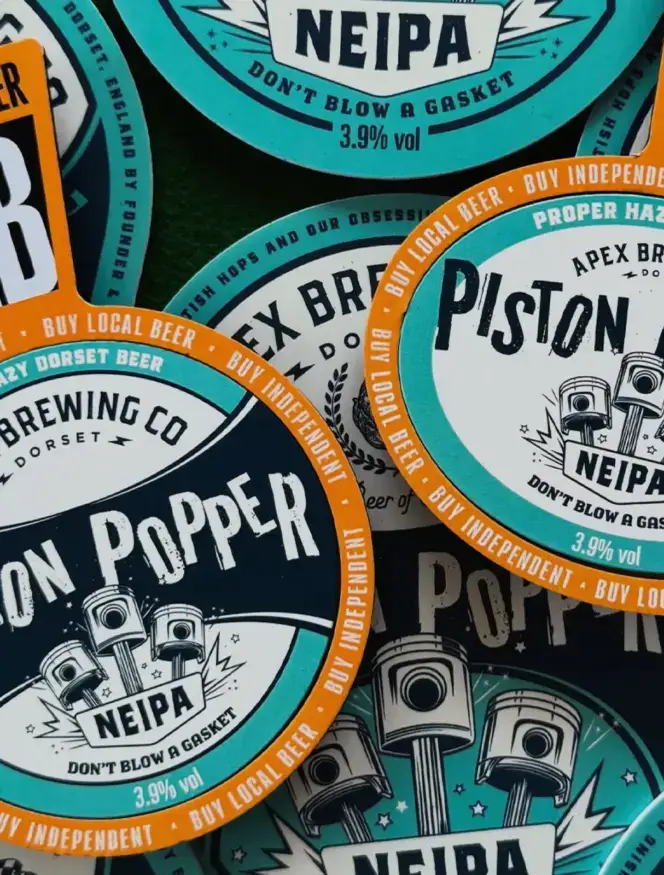
Apex Brewing Co
Content implementation, Ecommerce structure, Responsive front-end development, Shopify theme development, Technical planning
Independent brewery and ecommerce
-
CK Roofing Somerset
Branding, CMS, Content Creation, Hosting & Maintenance, SEO, Web Design, Web Development, WordPress
Construction, Roofing
-
Geo-Design
Branding, CMS, Hosting & Maintenance, SEO, Web Design, Web Development, WordPress
Geotechnical Consultancy, Rock Engineering
-
Animal Control Officers
Branding, CMS, Content Creation, Hosting & Maintenance, SEO, Web Design, Web Development, WordPress
Animal Control, Dog Handling



A complete website build.
We can handle discovery, website design, development, CMS configuration, migration, testing and launch as one joined-up project. This is the cleanest route when the existing website or platform no longer supports the business properly.
An inherited website or CMS
We regularly take over websites built elsewhere. The first step is understanding the code, hosting, dependencies and immediate risks. From there we can repair problems, improve the editing experience, develop new functionality or plan a controlled rebuild.
Development for an approved design.
If an internal team or another designer has completed the interface, we can assess it and develop the website. The design still needs to account for content, responsive behaviour, accessibility and real browser constraints; we will identify gaps before quietly guessing our way through them.
Ongoing development and improvement.
A useful website changes with the business. We can provide maintenance, support, performance work and phased development after launch. Hosting is available but not compulsory, and support arrangements are agreed around the actual level of responsibility required.

Straight answers about website development
A development proposal should make the important decisions clearer. These are the questions we are normally asked before a project begins.
It depends on the content, functionality, platform, integrations, migration work, deadline and level of design required. We do not sell a few-hundred-pound website package because that is not the work described on this page. Once we understand the requirements, we provide a scope and cost based on the job rather than hiding every project behind the same starting price.It depends on the content, functionality, platform, integrations, migration work, deadline and level of design required. We do not sell a few-hundred-pound website package because that is not the work described on this page. Once we understand the requirements, we provide a scope and cost based on the job rather than hiding every project behind the same starting price.
A focused website and a large content or ecommerce platform have completely different timescales. Availability of content, feedback and third-party access also affects delivery. We agree a realistic programme after discovery. Where there is a genuine deadline, phases can overlap or the work can be released in controlled stages.
No. WordPress is our preferred platform for many bespoke content-led websites because it is flexible, established and open source. We also work with Shopify, other suitable CMS platforms and existing custom systems. The recommendation depends on what the business needs to operate after launch.
Yes. Shopify can be an excellent choice for ecommerce businesses that benefit from its hosted infrastructure, checkout, product-management tools and wider ecosystem. We can design and develop Shopify stores, customise themes and work with integrations. The reinstated Shopify service page will explain that work in detail.
Usually, yes. We first review the platform, code quality, documentation, dependencies, hosting and the change you need. A properly built existing system may be worth extending. An unsupported or fragile one may be safer to migrate. We will explain the distinction before recommending a large piece of work.
Yes. We inherit websites regularly. Access to the hosting, domain, repository, CMS and relevant third-party accounts makes the assessment faster. We do not promise a fixed solution before seeing what we are taking responsibility for.
Yes. Once the agreed project has been paid for, the client owns the website and project code. Third-party platforms, licensed extensions, fonts and services remain subject to their own licences, which should be made clear rather than quietly presented as custom property.
Search structure is considered from the beginning: content hierarchy, crawlable navigation, URLs, redirects, metadata capability, performance and structured content all affect the build. A full search campaign, content programme or ongoing optimisation is separate and can be handled through our SEO services.
Yes. Managed hosting, maintenance and ongoing development are available and normally recommended when the website is commercially important. They are not compulsory. If another suitable provider is responsible for hosting, we can agree a clear deployment and support boundary.
Yes. A phased build can be sensible when the complete requirement is large, a deadline is fixed or the business needs to prove part of the idea first. The phases still need an overall technical plan so the first release does not block everything intended to follow it.
Tell us what the website needs to do.
You do not need to arrive with a platform, technical specification or finished answer. Tell us what the business is trying to achieve, what the current website gets wrong and which systems or deadlines we need to account for. We will help establish the sensible next step.