CMS Development Agency in Somerset
Blunt Notion plans, builds, inherits and improves content-managed websites from Yeovil for organisations across Somerset and the UK. WordPress is our primary expertise. Shopify is often the better ecommerce answer. We can also work with established PHP-based platforms and bespoke systems where retaining them makes commercial and technical sense.
The right CMS is the one that fits the content, the people managing it and the work the website must perform.
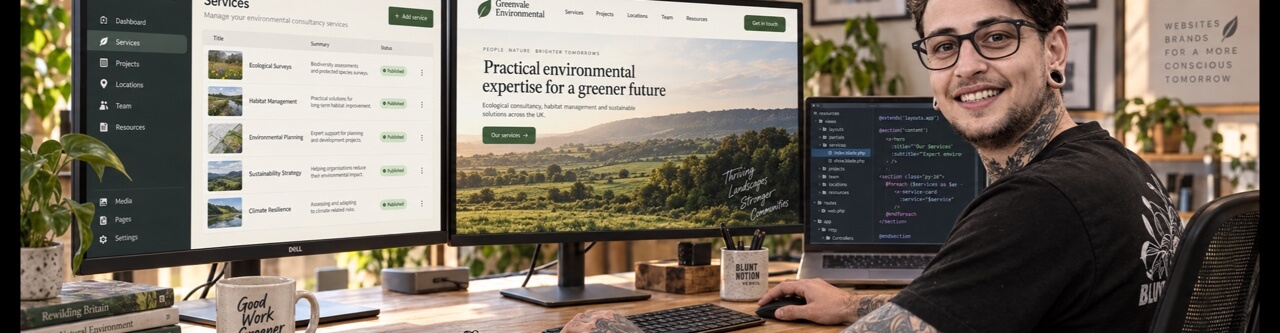

The CMS is not the website. It is how the people behind it keep the website useful.
Most content-management problems are not caused by a missing button. They begin earlier, when nobody decides what the organisation publishes, how those pieces of information relate to one another, who is responsible for them or where they need to appear.
The result is familiar. Every page becomes a blank canvas. The same information is copied into several places. Editors work around rigid templates or face hundreds of meaningless options. Important pages cannot be created without a developer, while unrestricted layout controls allow the design to unravel one block at a time.
We plan the content model before treating the administration area as finished. Services, projects, people, locations, resources, products and calls to action can each have a proper structure, useful relationships and sensible editing controls. Reusable components provide flexibility without making every page an uncontrolled design exercise.
For most content-led business websites, our preferred route is bespoke WordPress development. WordPress is established, extendable and familiar to editors, but its quality depends heavily on the theme, content model, plugin decisions and development behind it. For retailers, Shopify development can provide a more dependable operational foundation for products, orders and payments.
Other projects begin with an existing Craft CMS, Drupal, Magento, Statamic, Laravel application or documented bespoke PHP system. We can assess the codebase, hosting, dependencies and editorial experience before recommending whether to retain, repair, extend or migrate it. “Rebuild everything” is not a strategy.

Content, users and workflow.
We begin with what exists and what needs to change. That means the current pages, content types, documents, products, media, taxonomies and relationships and not merely a count of URLs.
We also establish who manages the website. A founder making occasional changes, a marketing team publishing every week and an organisation requiring approval before publication need different controls. Roles, permissions, previews, drafts and review stages should reflect the real workflow rather than an imagined “content editor”.
This work exposes duplication, missing content and awkward processes before they are reproduced in a new system.
Platform and content architecture.
We choose or retain a platform against the requirements. WordPress is normally our first choice for bespoke content-led websites because it combines a mature publishing system with extensive development control. Shopify is usually stronger when the core operation is retail and the business wants a hosted commerce platform.
An established PHP CMS or Laravel-based system may already contain valuable logic, integrations or data. In that case, careful improvement can be more responsible than migration. Where the existing platform is insecure, unsupported or fundamentally restrictive, we can plan a controlled replacement.
Headless architecture is considered when content genuinely needs to serve several channels, a separate application or an unusual front end. It is not automatically more modern, faster or easier. Additional infrastructure and preview complexity need a real justification.
Development, integrations and migration.
Content types, fields, relationships and reusable components are developed around the approved model. The administration experience is kept purposeful: enough control to do the job, with guardrails protecting the design, accessibility and consistency of the public website.
Integrations may connect forms, email, CRM, stock, bookings, search, payments or other business systems. We establish which system owns each piece of information and how failures should be handled. Two systems exchanging data badly are not an integration; they are duplicated work with a delay built in.
When content is migrated, URLs, metadata, relationships, media and redirects are planned alongside the data move. Search visibility should not become an accidental casualty of changing the administration system.
Testing, training and responsibility.
The CMS and public website are tested together. We check real editing tasks, permissions, previews, validation, forms, responsive output, accessibility and important integrations. Editors should not discover the content model’s weaknesses during the first busy week after launch.
Training uses the website actually delivered, not a generic platform tour. Documentation can cover recurring publishing tasks, responsibilities and the parts of the system that should remain under technical control.
Hosting, maintenance and ongoing development are available, but they are not compulsory. Once the agreed work has been paid for, the client owns the website and project code.

What can a CMS development project include?
A five-page service website, a large resource library and an established ecommerce operation do not need the same content-management system. We scope the work around the content, users, risks and existing investment.
Depending on the project, our work can include:
- existing CMS, theme, plugin and codebase review;
- platform-selection and technical consultation;
- content inventory and migration planning;
- content types, taxonomies and relationship modelling;
- reusable page components and template architecture;
- bespoke WordPress theme, block and plugin development;
- Shopify theme and structured store-content development;
- work within suitable PHP and Laravel-based systems;
- editorial roles, permissions and approval workflows;
- custom administration tools and validation;
- forms, search, filtering and gated resources;
- CRM, email, booking, payment and API integrations;
- product, article, document and media migration;
- URL mapping and redirect implementation;
- metadata and structured-data controls;
- responsive, accessibility and browser testing;
- performance, caching and database review;
- deployment, editor training and documentation;
- managed hosting, maintenance and ongoing development.
We do not build a proprietary CMS merely to make leaving difficult. Nor do we install a collection of plugins and call the resulting menu a tailored editing experience.

Different platforms. One useful standard: the system must fit the job.
Platform familiarity matters, but the recommendation still needs to start with the organisation, content and operational requirement.
-

WordPress development
Our primary CMS expertise. Bespoke WordPress themes, structured content, custom blocks, integrations and editing systems built around the organisation rather than a marketplace theme.
-
Shopify development
A strong hosted option when products, stock, orders and payments sit at the centre of the website. We design and develop the storefront as well as the structured merchant experience behind it.
-
Existing and PHP-based CMS work
Assessment, repair and development within appropriate Craft CMS, Drupal, Magento, Statamic, Laravel and bespoke PHP systems. We establish what is maintainable before promising what should be retained.
-
CMS migrations and technical SEO
Content inventories, URL mapping, redirects, metadata and technical checks that protect useful content and search visibility when a system changes.


Do you need a new CMS, or does the current one need better decisions?
A new platform is justified when the existing system creates material risk, blocks necessary functionality, cannot be supported or makes ordinary publishing unreasonably difficult. It can also make sense when several websites or disconnected content stores need to become one manageable system.
It is not justified simply because another CMS is newer or a developer prefers its code. If the current platform is secure, supported and fundamentally capable, better templates, a clearer content model or a focused integration may solve the real problem for considerably less disruption.
WordPress will be the right answer for many organisations because it is flexible, widely understood and capable of supporting sophisticated structured content when developed properly. Shopify removes considerable technical overhead for many retailers. A PHP or Laravel-based system can be appropriate where existing business logic or specialist functionality already lives there.
We are not the right people for every stack. Blunt Notion’s development capability is centred on WordPress, Shopify, front-end development and PHP-based systems. If a project requires specialist expertise outside that stack, we will say so rather than learn it at the client’s expense.
The useful answer may be a new build, a migration, a staged improvement programme or leaving the platform alone. Discovery exists to find that answer before the budget is committed.
Recent
Work
-

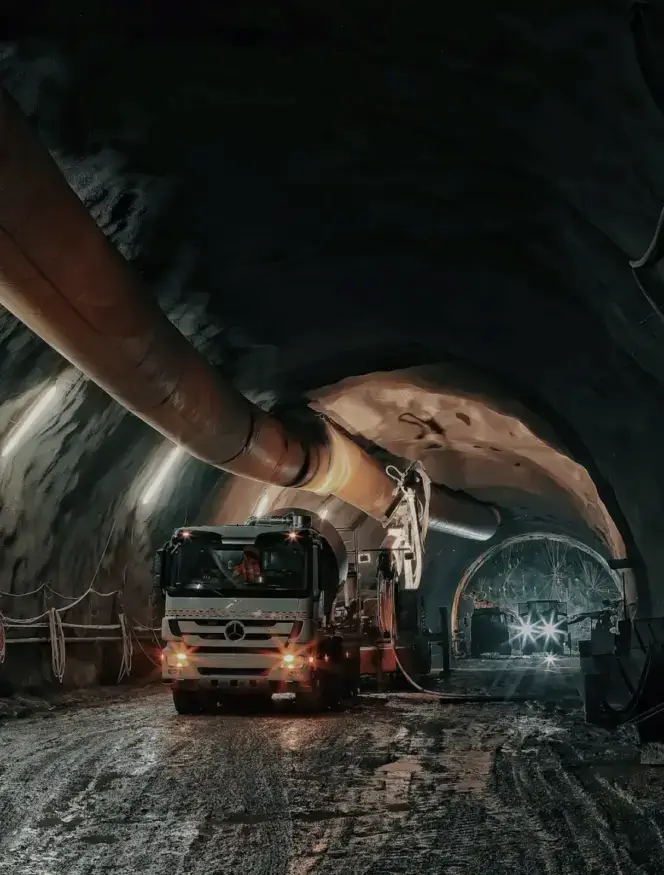
Geo-Design
Branding, CMS, Hosting & Maintenance, SEO, Web Design, Web Development, WordPress
Geotechnical Consultancy, Rock Engineering
-
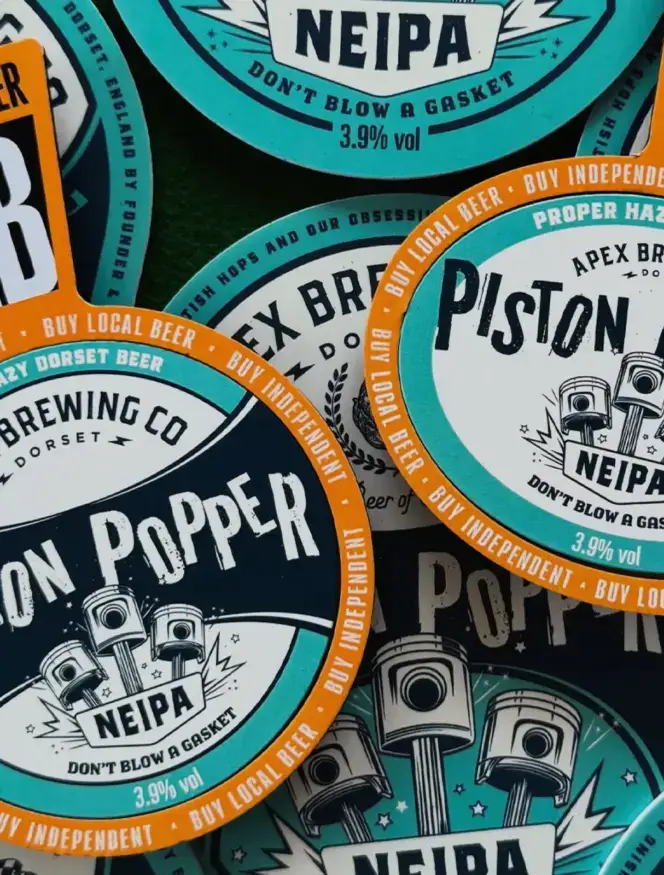
Apex Brewing Co
Content implementation, Ecommerce structure, Responsive front-end development, Shopify theme development, Technical planning
Independent brewery and ecommerce
-
Animal Control Officers
Branding, CMS, Content Creation, Hosting & Maintenance, SEO, Web Design, Web Development, WordPress
Animal Control, Dog Handling
-
Valinor Intelligence
Branding, CMS, Content Creation, Graphics Design, SEO, Web Design, Web Development, WordPress
Open Source Intelligence


A new content-managed website.
Suitable when the organisation needs a website designed, developed and structured around its own content and publishing requirements.
Discovery, content architecture, interface design, CMS development, migration, testing and launch can be handled as one connected project. WordPress is normally the leading option, but the recommendation is confirmed against the job.
An inherited or difficult CMS.
Suitable when the website is hard to update, technically fragile, dependent on abandoned extensions or poorly understood after its original supplier disappeared.
We assess the platform, code, hosting, integrations and content before recommending targeted repair, redevelopment or replacement. Access and documentation determine how far that assessment can go.
Migration or replatforming.
Suitable when the existing CMS is unsupported, operationally restrictive or no longer appropriate for the organisation.
Migration work can cover content inventory, data transformation, media, metadata, URLs, redirects, integrations, editorial checks and launch planning. The difficult part is rarely copying paragraphs; it is preserving structure, relationships and the behaviour people already depend on.
Ongoing CMS development and support.
Suitable when a viable platform needs regular development, technical responsibility, maintenance or a dependable person who can understand the whole system.
Support can be provided as defined projects or an ongoing arrangement. Hosting is available and recommended where appropriate, but it is not compulsory and does not change ownership of the website.

Straight answers about CMS development.
The platform name is only part of the decision. These are the questions that determine what should actually be built, retained or changed.
WordPress is our primary recommendation for bespoke content-led websites because it provides a mature editor, extensive development capability and broad long-term support. Shopify is often the stronger answer for ecommerce operations.
Other PHP-based or established systems can be appropriate when a business already depends on them or the requirement clearly favours them. We recommend after understanding the content, users, integrations, budget, support expectations and existing investment.
Often, yes. We first need to identify the platform, version, hosting, code quality, dependencies, documentation and access available. We are comfortable assessing WordPress, Shopify and suitable PHP-based systems, including bespoke applications.
If the project requires specialist expertise in a stack we do not support, we will say so rather than learn it at the client’s expense.
No responsible supplier can guarantee that rankings will never fluctuate. We can materially reduce the risk by inventorying valuable URLs and content, preserving or improving page intent, mapping redirects, retaining metadata where useful and checking technical signals before and after launch.
Migration planning should begin during discovery, not after the new website is ready to publish. Our technical SEO service covers the search-critical work in more depth.
Yes. The editing system is designed around the tasks your team needs to perform. Structured fields and approved components make routine publishing manageable without exposing every visual and technical decision.
We provide training around the finished system. Some changes will still require development, particularly where they affect templates, integrations, security or business logic.
We can build bespoke administration and content-management functionality in PHP or Laravel when a real requirement justifies it. In many cases, an established platform with focused custom development will be safer, quicker and easier to support.
A custom CMS should solve a problem that a maintained system cannot solve responsibly. It should not exist merely so an agency can lock the client into proprietary software.
We can work with API-driven or headless content where the publishing and front-end requirements justify the additional architecture. This includes making WordPress headless, with WordPress handling content management while a separate front end consumes its API. Good reasons can include several delivery channels, an application consuming the same content or a front end that genuinely needs to operate independently.
Headless is not automatically faster or better. Preview, deployment, hosting, search rendering and editor expectations all need to be considered before choosing it. Making WordPress headless also introduces additional integration, caching and preview considerations that need to be assessed against the project’s actual requirements.We can work with API-driven or headless content where the publishing and front-end requirements justify the additional architecture. This includes making WordPress headless, with WordPress handling content management while a separate front end consumes its API. Good reasons can include several delivery channels, an application consuming the same content or a front end that genuinely needs to operate independently.
Headless is not automatically faster or better. Preview, deployment, hosting, search rendering and editor expectations all need to be considered before choosing it. Making WordPress headless also introduces additional integration, caching and preview considerations that need to be assessed against the project’s actual requirements.
Potentially. Common requirements include CRM, email, search, booking, payment, stock and reporting services. We establish what data moves, which system owns it, how authentication works and what should happen when an external service fails.
Existing APIs and documentation are reviewed before an integration is priced confidently. A logo on an integrations page is not proof that two systems will exchange the information your process requires.
Cost depends on the content model, templates, permissions, migration, integrations, design, functionality, inherited risk and deadline. Installing WordPress for a small website and migrating a structured resource platform are not comparable projects.
After an initial conversation, we define the requirement and provide a scoped proposal. Larger projects can be phased where the first phase remains useful and technically sound.
Timescales depend on discovery, design, development, content readiness, migration, integrations, testing and how quickly decisions can be approved. Existing systems can require technical investigation before a reliable delivery plan is possible.
We provide a realistic schedule once the scope and dependencies are understood. A tight deadline can influence the delivery approach, but it does not make unresolved requirements disappear.
Yes. Managed hosting, updates, backups, monitoring, troubleshooting and planned development can be provided after launch. The appropriate arrangement depends on the platform and the level of responsibility required.
Hosting and support are recommended where nobody internally owns the technical responsibility, but they are not compulsory and the client retains ownership of the website and project code.
Tell us what the content system needs to make easier.
New website, awkward WordPress build, Shopify content problem, inherited PHP system or migration that needs planning—send us the platform, the people using it and what is currently getting in the way. You will get a direct conversation about the sensible next step.